About Phoenician Cádiz
The starting point for understanding the Phoenician presence in Spain is Gadir (Cádiz), the first city in the Western world and a beacon of civilisation in Europe for centuries, celebrated by the ancients for its prosperity and grandeur. Classical sources agree that Gadir was founded 80 years after the fall of Troy, in 1104 BC; however, current archaeological data suggests the city sprang to life around 300 years later.
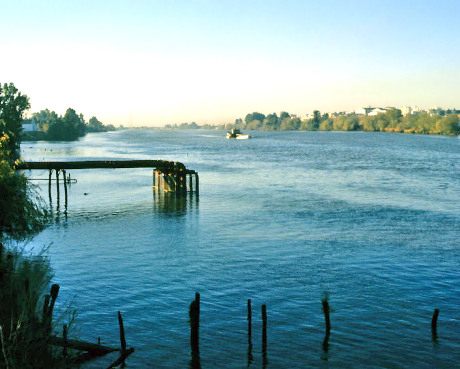
Gadir, meaning 'walled stronghold', was strategically located on a small island at the mouth of the Guadalquivir River, controlling access to the rich agricultural lands of Andalucía’s interior and the precious metal resources of Tartessos. Gadir’s connection with the local population and its position beyond the Pillars of Hercules on the Atlantic coast allowed it to dominate trade routes, making the thriving metropolis the heart of Phoenician Spain.
The Phoenicians established Gadir to exploit the region’s mineral wealth, especially its abundant silver deposits. Local rulers like the ‘Silver King’ Arganthonios gladly traded these resources for Phoenician luxuries, including wine, olive oil, aromatics, fine textiles, wheel-made ceramics, crafted metalwork, and gold jewellery.
Described as a 'joyful and licentious city' by the Roman poet Martial, Gadir was best known in antiquity for its Temple of Melqart (later the Temple of Hercules Gaditanus). Ancient references to this shrine, dedicated to the supreme Phoenician god, provide our primary source of knowledge regarding the city’s foundation.
Writing in the first century AD, the historian Velleius Paterculus states that the city was founded 80 years after Troy’s destruction in 1184/83 BC, giving a date of 1104/03 BC:
‘About this time, also, the fleet of Tyre, which controlled the sea, founded in the farthest district of Spain, on the remotest confines of our world, the city of Cádiz, on an island in the ocean separated from the mainland by a very narrow strait.’
While this date is unanimously confirmed by classical sources, the 300-year inconsistency with the archaeological evidence may suggest that the initial Phoenician presence in Gadir was temporary and trade-based, occurring long before a permanent settlement was established.
The continuous human occupation of Cádiz for 3,000 years means that the physical remains of Gadir are buried under Roman, medieval, and modern structures; consequently, large-scale archaeological excavation is practically impossible.
While much remains unclear about the Phoenician city and its layout, Gadir was located on three main islands in the Bay of Cádiz. After millennia of sedimentation, these islands now form a single peninsula connected to the mainland.
The largest of the islands was Kotinoussa (modern-day Sancti Petri), with the Temple of Melqart situated at its southern end; a shrine dedicated to the Phoenician fertility and weather god Baal Hammon (Greek Kronos) sat to the north.
The smaller island of Erytheia housed a small Phoenician settlement at the highest point of the old city centre of modern Cádiz. Erytheia was also the site of a temple dedicated to the goddess Astarte (Venus/Aphrodite), the divine consort of Melqart (Hercules).
The third island in the archipelago was Antipolis, believed to have been uninhabited until the Roman era. Judging by the vast quantity of sea snail shells discovered at the site, the island likely served as an industrial zone and home to foul-smelling factories producing the incredibly valuable Tyrian purple dye.
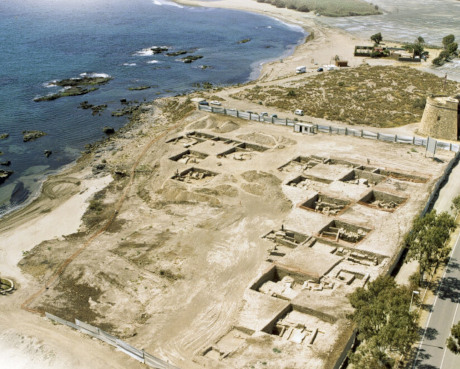
The sparse signs of human occupation on the three islands can be explained by the Phoenician foothold on the mainland at Castillo de Doña Blanca. This appears to have been the main settlement area and true heart of ancient Gadir, while the islands were reserved primarily for religious and economic activities.
Castillo de Doña Blanca was situated on a promontory roughly 15 m above sea level; it featured an excellent harbour alongside thick defensive walls up to 6 m high. Eighth-century BC residential brick buildings have been discovered among a network of streets, lanes, and public spaces, pointing to a high degree of urban organisation.
The settlement must have been the main commercial link between Gadir and Tartessos, and it played a crucial role in providing the Phoenician islands with fresh water, agricultural produce, and construction materials.
The inhabitants of Castillo de Doña Blanca introduced advanced animal husbandry techniques and produced a surplus of meat for export. Wheat, barley, grapes, and olives were cultivated in the fertile conditions of Andalucía, while fishing for tuna and sea snails undoubtedly played an important commercial role.
An intriguing question is raised by the earliest pottery discovered at the settlement: an unusually high volume of handmade local ceramics was found alongside Phoenician wheel-made equivalents. This indicates that, at least initially, Castillo de Doña Blanca was a mixed settlement where Phoenicians peacefully integrated and coexisted with the indigenous population.
Melqart was the supreme god and mythical founder of the Phoenician city-state of Tyre; the temple dedicated to the deity represented a powerful bond between Gadir’s inhabitants and their homeland.
Melqart literally means ‘King of the City’, and his main function was to protect both citizens and trade. Consequently, the temple served as a neutral, sanctified meeting place where Phoenicians could strike commercial deals with representatives of Tartessos in an atmosphere of mutual confidence.
The controlling and supervisory role of the shrine's priests is clear from the fact that ten percent of all trade profits went directly to the temple; the sanctuary acted as both a treasury and a bank, likely keeping official records of the city’s commercial transactions.
Divine authority was accepted by local populations largely due to the elaborate rituals involved in Melqart's worship. These included daily sacrifices, three altars preserving an eternal flame, and a renowned oracle later consulted by leaders such as Hannibal and Julius Caesar. Massive bronze columns flanked the entrance to the temple, cementing its status as a key pilgrimage destination for centuries.
Although next to nothing remains of the Temple of Melqart or its successor shrine, the Temple of Hercules Gaditanus, ancient descriptions preserve its legacy. Its immense Roman-era fame as the guardian of Hercules' relics - supposedly including his mortal remains - emphasises its foundational role in Phoenician Spain and Western Europe.
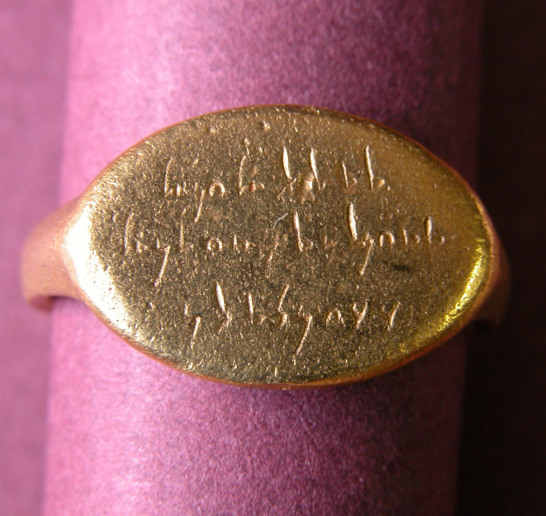
The Cádiz Ring
This obscure but highly significant gold ring was found randomly in Cádiz, and its dating has recently been revised back to the eighth century BC. This revision makes the inscription the earliest written record of the city’s existence: ‘To the lord, all mighty, and his servants the people of Gadir’.
The ring probably belonged to priests at the main temple in Gadir dedicated to Melqart (Hercules), who formed a divine couple with Astarte (Venus) in Phoenician and later Roman culture. Scholars believe that the phrase ‘people of Gadir’ implies their status as a political collective, and that the final part of the inscription actually translates to: ‘according to (the law) of the people of Gadir’.
This suggests that a citizens' assembly existed in the city, which would represent the first form of popular government and democracy in Western Europe.
Address
Opening Hours
Tues-Sat: 9am–9pm, Sun & holidays: 9am–3pm, Mon: Closed.
Free admission for EU citizens and Spanish residents. Other visitors: €1.50.
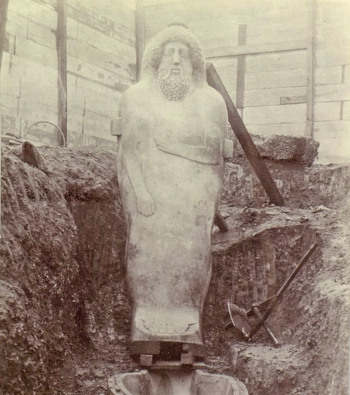
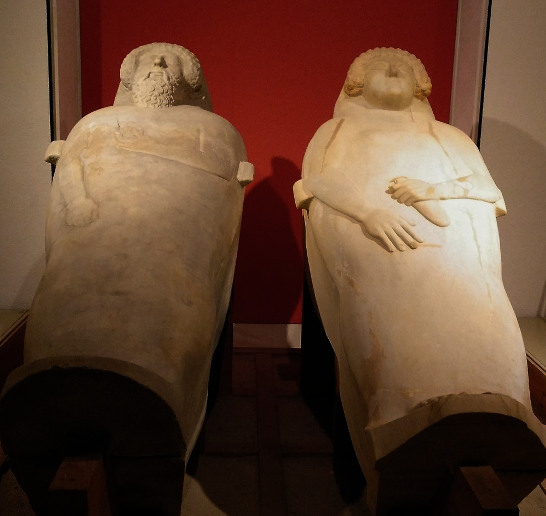
In 1887, a fifth century BC marble sarcophagus of a bearded Phoenician male was discovered and became the starting point of the Museum of Cadiz’s archaeological collection, occupying its own room in the Museo Arqueológico de Cádiz from 1893.
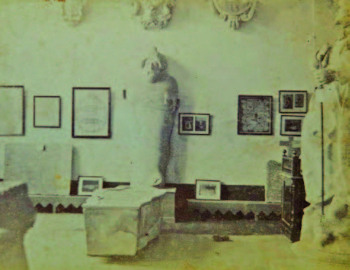
The museum moved to its current location on Plaza de Mina in 1935, with the ‘Lady of Cadiz’ female Phoenician sarcophagus added to the collection after its discovery in 1980.
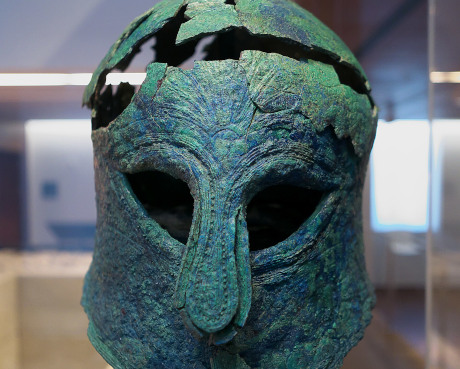
Apart from this unique heritage, the museum houses the Priest of Cadiz statue, an extensive Phoenician jewellery collection, and other relics discovered in the city Cadiz, on the island of Sancti Petri, and at Doña Blanca in Puerto de Santa María.