About El Carambolo
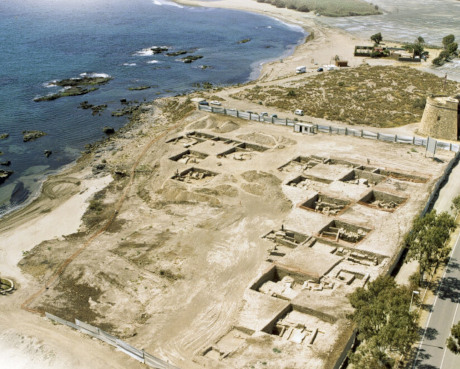
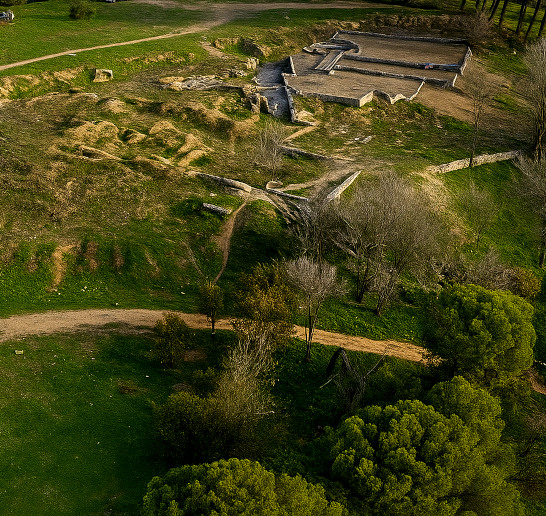
In 1958, the accidental discovery of the Treasure of El Carambolo - consisting of 21 intricate and stunning gold pieces - led to excavations on a hill near Camas, revealing a monumental sanctuary dedicated to the Phoenician goddess Astarte.
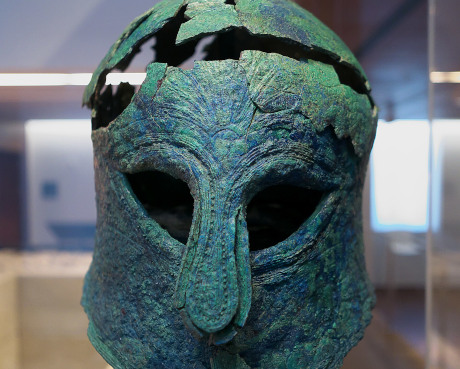
The El Carambolo sanctuary functioned as a combined religious complex, economic centre, and meeting place. It remained active between the ninth and sixth centuries BC before its abrupt and unexplained abandonment. The intriguing Phoenician relics unearthed at the site are now displayed at the Archaeological Museum of Seville.
In a world heavily dependent on the whims of nature, the El Carambolo sanctuary provided crucial divine protection. Today, the miraculously preserved legacy of its high priests stands as a fundamental pillar of both Spanish and Western European heritage.
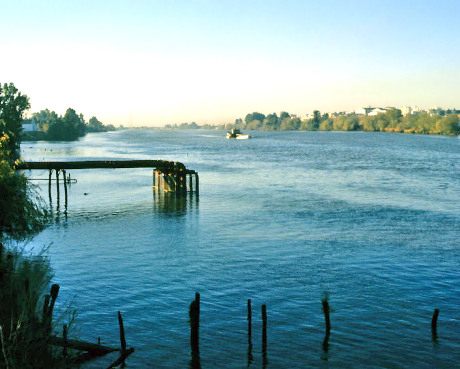
The Phoenician sanctuary of El Carambolo occupied a strategic location for trade and communications on a hill above a wide bay at the mouth of the Guadalquivir River, facing the Atlantic Ocean.
With a navigable estuary leading far inland to the rich agricultural and mineral resources of the Lower Guadalquivir valley, El Carambolo was perfectly positioned for large ships and river boats; consequently, it linked the Atlantic trade routes to the heart of the fabled Tartessos.
Debate still rages over whether El Carambolo is a Phoenician or Tartessian site. However, it is difficult to imagine the indigenous people of southern Spain - who lived in relatively primitive conditions - building elaborate religious sanctuaries dedicated to a foreign goddess like Astarte.
Although much remains unclear, El Carambolo appears to be a purely Phoenician construction used for ceremonies, sacrifices, feasting, socializing, and trading with the local population in an atmosphere of mutual trust.
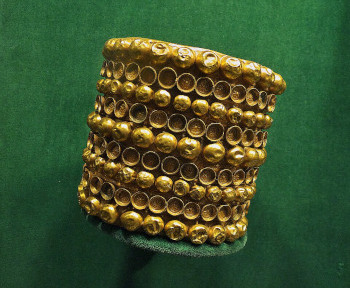
While the most important feature of the site is the bull-shaped sacrificial altar, the gold treasure hoard found at El Carambolo also carries clear religious significance. The oxhide-shaped breastplates and other ornaments were likely worn by high priests - or by the bulls themselves - during their fatal ritual procession.
The famous bronze statuette of Astarte represents an offering inscribed by two Phoenician brothers in thanks for her divine protection. Furthermore, the high quality of the wheel-made pottery and the presence of a bronze incense burner (thymiaterion) confirm that El Carambolo functioned as a premier shrine dedicated to the Phoenician goddess.
El Carambolo can be seen as an essential point of interaction between the Phoenician ‘colonisers’ and the inhabitants of legendary Tartessos—a sanctified gathering place for merchant seafarers laden with novelties and luxuries to meet the subjects and representatives of local rulers like the ‘Silver King’ Arganthonios.
Local leaders were happy to exchange their plentiful but little-valued precious metals for novelties like wine, olive oil, aromatics, fine and colourful clothing, crafted metalwork, and wheel-turned ceramics. In the process, they enriched their culture through peaceful exchange, creating a ‘colonial’ model that is uniquely Phoenician.
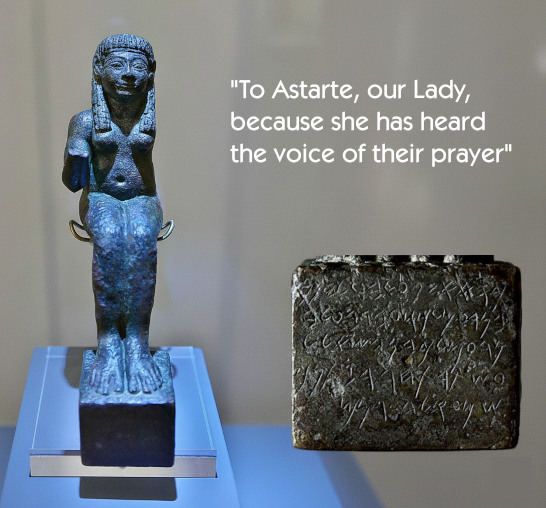
Astarte of El Carambolo
This eighth-century BC bronze statuette of the Phoenician goddess Astarte was found at El Carambolo in the early 1960s, during excavations that revealed a major Phoenician religious sanctuary at the site.
The Egyptian-style sculpture shows Astarte seated on a footstool and is inscribed with a dedication to the goddess from two brothers. They offered it in thanks for her divine protection, most likely during a recent sea voyage across the Mediterranean. Crucially, this inscription represents the oldest example of the Phoenician language discovered on the Iberian Peninsula.
Astarte was the principal goddess of the Phoenician city-state of Tyre, who—alongside her partner Melqart—protected its citizens, sailors, and maritime traders. The strategic coastal location of El Carambolo, combined with the presence of this statue, suggests that the sanctuary was dedicated primarily to her.
The Archaeological Museum of Seville houses around 60,000 pieces in a beautiful pavilion in Maria Luisa Park built for the Ibero-American Exhibition in 1929.
The first floor has a room dedicated to the sanctuary of El Carambolo and the findings made there, including a reproduction of the famous Treasure of Carambolo and the bronze statuette of the principal Phoenician goddess Astarte discussed above.
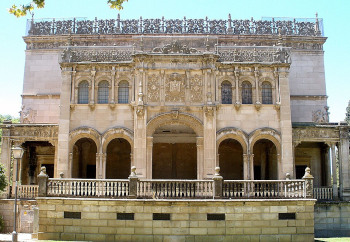
The museum has been closed since 2021, and is currently undertaking a multi-million-euro restoration and redevelopment project with reopening expected in 2027.