About Morro de Mezquitilla
Morro de Mezquitilla is the oldest Phoenician settlement so far discovered on Spain’s Mediterranean coast, with excavations dating the first stage of occupation to the ninth century BC.
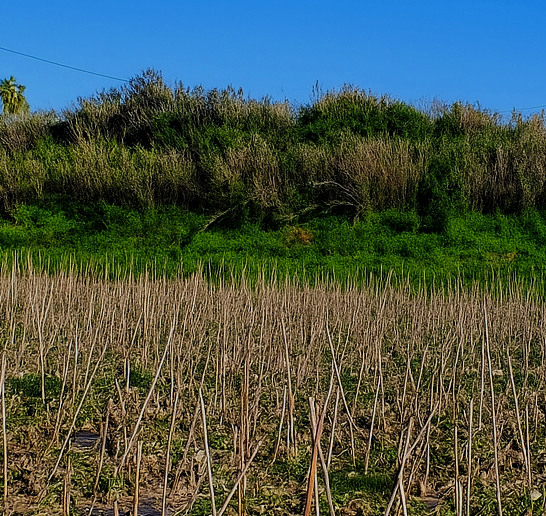
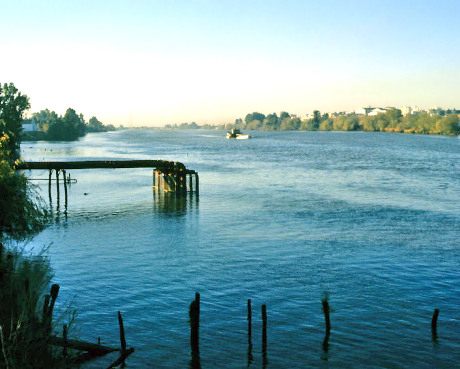
Overlooking the mouth of the Algarrobo River, the site sits on a flat-topped hill about 30m above sea level. It is mirrored on the opposite bank by the hill of the Trayamar Necropolis, whose monumental chamber tombs bear witness to the prosperity of this Phoenician community some 3,000 years ago.
Morro de Mezquitilla was originally seen as a trading post and convenient stopover during bad weather for Cádiz-bound ships. However, the concentration of nearby Phoenician settlements, the presence of a wealthy elite spanning generations, and evidence of sophisticated urban planning and industrial activity suggest a deeper role in the local community.
Morro de Mezquitilla was first identified by the German Archaeological Institute Madrid in 1967 following investigations at the Trayamar Necropolis. Excavations in the 1970s led to an authoritative site survey by the renowned archaeologist Hermanfrid Schubart.
In ancient times, the coastal promontories of Morro de Mezquitilla and Trayamar formed a peninsula. The resulting topography follows a typically Phoenician settlement pattern: a hilltop location offering natural defenses, excellent sea visibility, a safe harbor within a sheltered bay, and a cemetery placed across a navigable inland waterway.
The area has revealed a cluster of Phoenician settlements in close proximity, with the Chorreras site only 800 m to the east and Toscanos 7 km to the west. This concentration initially puzzled historians who assumed the main Phoenician objective in southern Spain was Cádiz and the silver mines of Huelva; consequently, they downplayed the Phoenicians' wider influence and relations with the local population.
The earliest phase of the Phoenician settlement at Morro de Mezquitilla, dating to around 810 BC, involved constructing large rectangular residences. These included a 190 m² building with 16 separate rooms arranged around a central courtyard. The walls were built of sun-dried brick and plastered in red-brown lime - a durable construction method previously unknown on the Iberian Peninsula.
The luxurious dwellings were situated on regularly laid-out streets that followed the natural slope of the hill. This layout represents advanced urban planning for an important, orderly, and prosperous settlement - a status confirmed by the monumental family tombs of the Phoenician elite on the opposite bank of the Algarrobo River at Trayamar.
A new phase of construction took place at Morro de Mezquitilla in the seventh century BC, during the peak of the Phoenician colonial enterprise in Spain. More solid residences were built on stone foundations using a different orientation. This expansion likely served to accommodate the population of nearby Chorreras, which was peacefully abandoned at the time.
A fascinating feature of Morro de Mezquitilla is the manufacturing quarter on the outskirts of the residential area, consisting of metal and ceramic workshops dating from the settlement’s foundation. The metal workshops did not carry out primary smelting; instead, they functioned like blacksmith shops, recycling and reworking iron and copper to meet the domestic needs of the settlers.
A number of metalworking furnaces have been discovered alongside the remains of iron slag, fragments of bellows, nozzles, ventilation pipes, and containers with iron ore residue attached. This represents the most extensive evidence of Phoenician metallurgy found in Spain, where advanced iron working was previously unknown; it indicates that specialist industrial workers lived permanently in the settlement from the very beginning.
While not on the scale of production seen at Cerro del Villar, the site yielded vast quantities of handmade and revolutionary wheel-turned pottery. Specifically, the differing widths of the red-slip plate rims have proven crucial for dating Phoenician settlements across Spain.
Las Chorreras
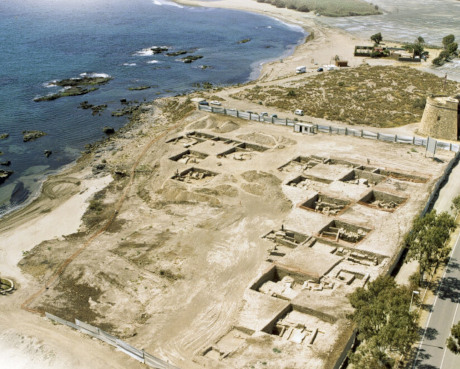
The Phoenician settlement of Chorreras was located less than 1 km east of Morro de Mezquitilla on a rocky promontory overlooking the sea. The site was occupied for only a brief period, from roughly 750 to 700 BC, before it was peacefully abandoned and the population relocated to Morro de Mezquitilla.
Because Chorreras was never reoccupied or built over, excavations have revealed its original site plan in greater detail than is typical for ancient Phoenician locations. The layout features large, solidly built houses with multiple rooms, lining regularly laid-out streets with substantial open space between residences.
An oval-shaped shaft tomb discovered at Chorreras contained a sandstone container, an alabaster burial urn, ceramic vessels, and a protective scarab amulet. The cremated remains belong to an elite young woman, aged around 18, and a newborn child, both of whom likely died during childbirth.
Velez-Malaga
Address
Opening Hours
Tues-Fri: 10 am–2 pm, 5-8 pm
Sat-Sun: 10 am–2 pm
Free admission.
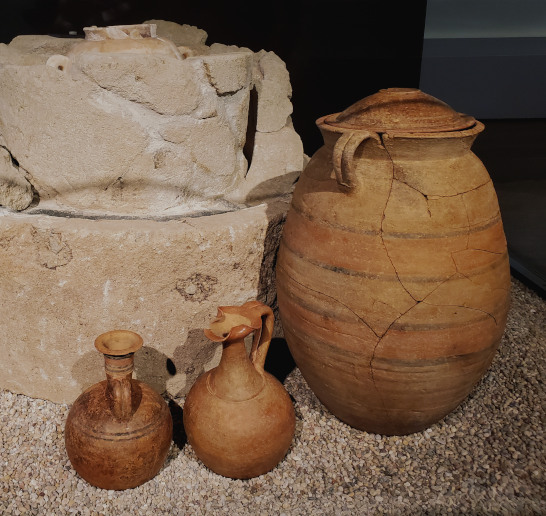
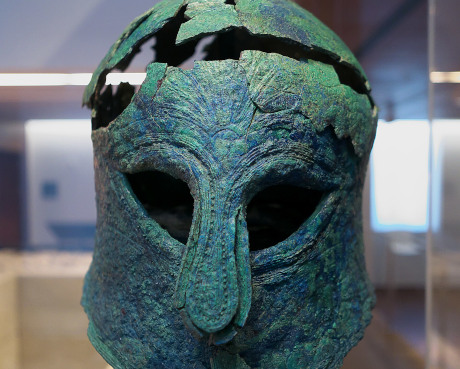
The Museum of Velez-Malaga has a dedicated Phoenician room showcasing artifacts discovered in the Axarquia region of Andalusia, as well as documents, information and 3D models related to the Phoenician presence in the area.
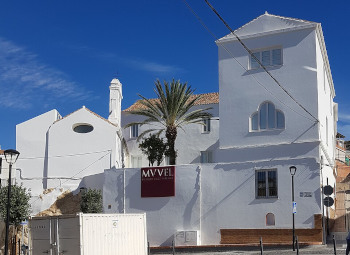
The Museum’s director, Emilio Martin Cordoba, is a leading authority on the Phoenician settlements in Southern Spain, and also organises an annual guided coach tour of the main local sites including Toscanos, Morro de Mezquitilla and Trayamar.
.jpg)